

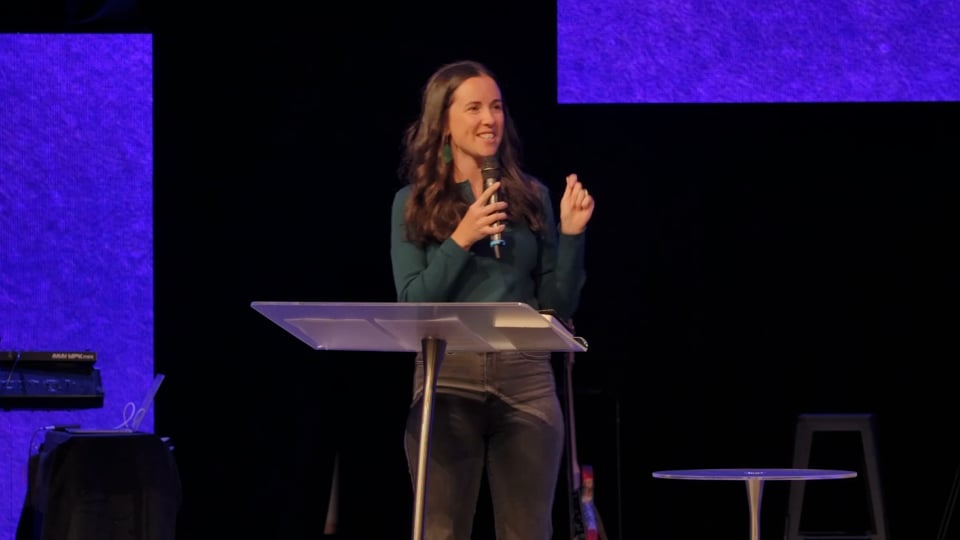
Nartarsha Wisewould–Join us as we joyfully celebrate the Resurrection and Baptisms.
The resurrection of Jesus was the launch of God’s new creation, where forgiveness is just the beginning. Through His resurrection, Jesus becomes the first of a new kind of humanity. Believers are not just saved from sin but invited to participate in God’s ongoing work of putting the world right.
Nartarsha Wisewould–Join us as we joyfully celebrate the Resurrection and Baptisms.
The resurrection of Jesus was the launch of God’s new creation, where forgiveness is just the beginning. Through His resurrection, Jesus becomes the first of a new kind of humanity. Believers are not just saved from sin but invited to participate in God’s ongoing work of putting the world right.
Christy McHugh–As we near the end of our series, we mark Palm Sunday—the start of Passion Week and Jesus’ triumphal entry into Jerusalem. Luke 19 paints a vivid scene: Jesus rides a colt into a city alive with Passover tension. The crowds hail him as King, perhaps hoping for a political uprising against Rome. But what if his Kingdom isn’t what they expect? Will we turn like the crowd, or pray, “Lord, open my eyes to see what you are doing?”
Christy McHugh–As we head towards the end of our series, we are celebrating Palm Sunday. This is the beginning of the Passion week, Jesus's triumphant entry into Jerusalem. Our hope for this series has been to set a stage to understand in greater depth, the message of the cross and the hope of the resurrection. Luke 19 crafts a dramatic picture, Jesus riding a colt, into a charged atmosphere of Passover in Jerusalem. For the crowds watching, are they imagining a political coup détate? Will Jesus, who they shout out as King, overthrow the Romans?
In the midst of this symbolic event - Luke highlights Jesus weeping, an audible wailing, signifying a depth of grief. Then, instead of overthrowing the Roman rule - Jesus heads to the temple. The expectation of what Jesus's triumphant entry would symbolise for the Jew's of that day was of a conquering hero, defeating Rome. Yet, what they got was a grief stricken King who challenged the Spiritual authority.
Jesus came to establish a Kingdom, but what happens when it doesn’t look the way we want it to? Will we turn like the crowds who, on one day, shouted 'Hosanna', and then shifted to 'crucify' him in a matter of days? Or, will we respond with a simple prayer: Lord open my eyes to see what you are doing?
Resources–Study Guide
Sarah Hudson– Jesus’ submission in the Garden of Gethsemane is the turning point of history and the key to the Kingdom and our transformation.
Resources–Study Guide
Peter McHugh–Looking at the moment when Jesus washes the disciples' feet, we are invited to consider the dirt on our feet representing the pain that we gather as we walk through life. When we care for one another’s pain, we do it by sharing our power and by empowering one another. Jesus served because he knew who he was, he knew his image, so how do we go about being image bearers as we wrestle with our pain and stop bearing our own image that has been created through that pain.
Dave McHugh–Judas’ downfall began not with the kiss of betrayal in the garden — it didn't even begin when he went to the chief priests and set the wheels in motion — but long before, with duplicity in his heart. Betrayal is never the result of a single moment — it is the result of a heart that is duplicitous.
Dave McHugh–Judas’ downfall began not with the kiss of betrayal in the garden — it didn't even begin when he went to the chief priests and set the wheels in motion — but long before, with duplicity in his heart. Betrayal is never the result of a single moment — it is the result of a heart that is duplicitous. Duplicity comes from a Latin word meaning "double" or "twofold". If we are being duplicitous, there are two ‘you's’: the one you're showing and the one you're hiding. When we engage in duplicity, we present a false front — we are pretending — it is deceitful, hypocritical and disguises one's true heart posture.
Resources–Study Guide
Matt Romano–What does it truly mean to bear fruit that lasts? Using the story of the fig tree, we will uncover that fruitfulness is not about performance, busyness, or appearances; it grows out of a surrendered heart and a life aligned with God.
We’ll unpack how Jesus uses the fig tree as a mirror for our lives, exposing empty appearances and calling us to die to ego, agendas, and shortcuts so that real, lasting fruit can emerge.
Matt Romano–What does it truly mean to bear fruit that lasts? Using the story of the fig tree, we will uncover that fruitfulness is not about performance, busyness, or appearances; it grows out of a surrendered heart and a life aligned with God.
Fruit that lasts is life-giving: it heals, restores, reconciles, and leaves a lasting impact. It takes time, patience, and inward transformation. When our private formation shapes our public expression, God’s life flows through us in ways the world can see.
We’ll unpack how Jesus uses the fig tree as a mirror for our lives, exposing empty appearances and calling us to die to ego, agendas, and shortcuts so that real, lasting fruit can emerge.
This is a call to stop chasing leaves and start cultivating a life that produces fruit that truly matters, for our families, our communities, and the Kingdom of God.
Resources–Study Guide
Anna Joyce–Jesus cleanses the temple of all that separates us from His presence. He is seeking to restore a sense of the sacred to the temple.
With the coming of the Holy Spirit at Pentecost, we now have the Holy Spirit dwelling in us and we are His living temple. As His living temple, what are the things that need driving out of our lives so we can live a life of worship?
Anna Joyce–Jesus cleanses the temple of all that separates us from His presence. He is seeking to restore a sense of the sacred to the temple. By driving out the merchants and challenging religious corruption, he resets the sanctity of God's house and emphasises His unwavering dedication to preserving holiness and integrity in His house of worship.
With the coming of the Holy Spirit at Pentecost, we now have the Holy Spirit dwelling in us and we are His living temple. As His living temple, what are the things that need driving out of our lives so we can live a life of worship? What are the barriers that stop us from living a life in the Spirit?
Resources–Study Guide
Christy McHugh–Preparation & Purification is the focus for our new series set in the Passion week. What happens just before Jesus's final week sets us up to prepare our hearts for Easter. Mary anoints Jesus in an act that seemed extreme but was deeply significant. The anointing symbolized preparation for His burial and declared His authority as King. We are invited to prepare our hearts for Easter and reflect on the meaning of His journey to the cross.
Christy McHugh–Preparation and Purification is the focus for our new series set in the Passion week. The week starts on Sunday (March 29, AD 33) as Jesus enters Jerusalem and visits the temple. It continues each day from Monday through to the following Sunday and the gospels share intimate moments of Jesus’s walk towards the cross. Culminating in His death and resurrection on Sunday April 5th, AD 33.
What happens just before Jesus's final week set's us up to prepare our hearts for Easter. In John 12, we find the account of the anointing of Jesus by Mary, this act was extreme, offensive to many, but of such importance to Jesus that in his words, the gospel story will be incomplete without including what she did. What was the symbolism behind Jesus being anointed with oil? Firstly, is preparation for his burial. Preparation involves anticipation of what is to come and a process. Secondly, customary use of being anointed with oil is in declaring authority, specifically for the High Priest or Kings.
As we consider how Jesus was prepared for his final week, prepared for burial and declared King, may this highlight ways we can prepare ourselves for one of the most history defining moments our world has know.
Resources–Study Guide
The Passion–Preparation + Purification
As we approach Easter, we will examine the events and teachings that occurred during Passion Week. This sacred period, beginning with His triumphal entry into Jerusalem and culminating in His death and resurrection, reveals the depth of God’s love and the purpose of Christ’s mission.
Throughout Passion Week, Jesus not only fulfilled prophecy but also offered profound lessons on humility, obedience, forgiveness, and sacrificial love. Each moment—from the washing of the disciples’ feet to His prayers in Gethsemane—invites us to reflect on our own walk with Him.
As we meditate on these events, we are invited into a time of preparation and purification. The Holy Spirit gently works within us, revealing areas of our hearts that need renewal and transformation. Throughout this series, may we open ourselves to be transformed, allowing the message of the cross and the hope of the resurrection to shape our lives more fully.
Nartarsha Wisewould–Join us for a special time of reflection as we remember and consider the incredible sacrifice that Jesus made for us.